
Insurance Cover for Engineering Businesses: Client Goods
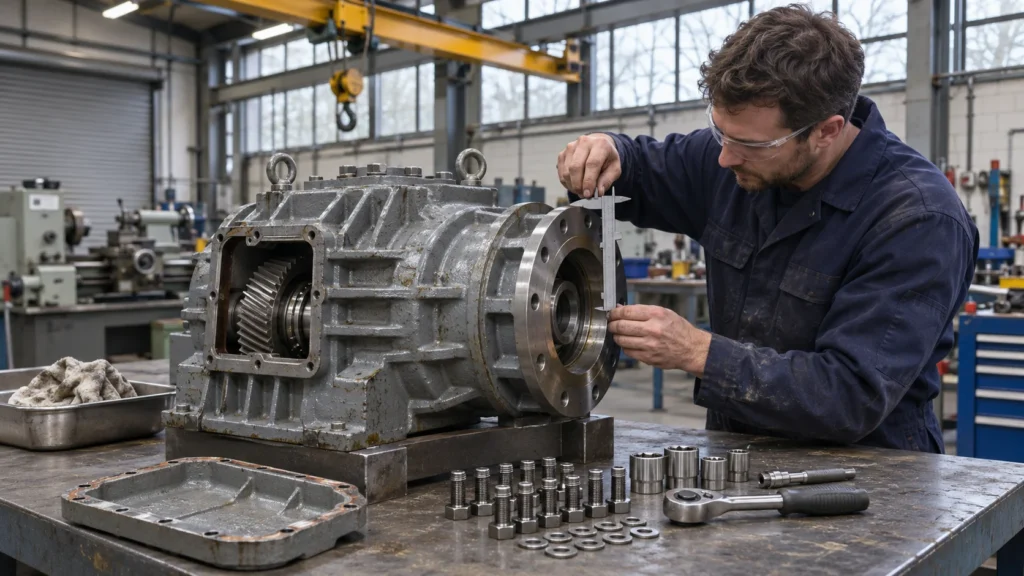
Precision engineers, fabricators and repair specialists routinely take in valuable machinery, components and tools for overhaul, testing or modification. Arranging the right insurance cover for engineering businesses starts with knowing where standard commercial policies stop protecting client assets. Many workshop owners only discover the gap after a serious loss. Their premises policies often fail to respond to third-party items undergoing work.
Engineering workshops often hold client machinery worth far more than their own tooling and plant combined. Fire, theft, a handling drop or a processing error can all damage that plant. Who then pays for the physical loss and the downtime that follows? Is customer equipment covered while it is in my workshop?
Key Takeaways
- Standard commercial contents insurance generally excludes customer property in your care unless your schedule carries an explicit goods in trust extension.
- Bailment law requires a workshop to take reasonable care of customer equipment and to disprove negligence when loss occurs.
- Public liability policies typically exclude damage to the specific part of third-party property on which your technicians are actively working.
- Carrying customer machinery in company vehicles requires goods in transit cover with limits matching your peak consignment values.
- A live workshop asset register keeps your goods in trust limit aligned with the value of client plant on site.
Workshop Custody and Customer Machinery Exposures
Holding third-party plant for repair or machining creates exposures that cut across property and liability insurance. Engineers must reconcile contract terms, common-law bailment duties and policy wordings. Standard contents policies protect your own capital investment. They frequently exclude client property unless you declare it and your insurer endorses it.
The table below sets out how standard policy sections compare with the specialist extensions needed for client equipment. Without those extensions, losses during lifting, testing, machining or storage can fall entirely on your business. That includes substantial repair bills and, in many cases, claims for the client’s lost trading.
| Policy Section | Standard Scope | Position on Customer Property |
|---|---|---|
| Policy SectionCommercial Contents | Standard ScopeOwn plant, machinery, tools and stock | Position on Customer PropertyExcluded unless endorsed as goods in trust |
| Policy SectionPublic Liability | Standard ScopeThird-party injury and property damage | Position on Customer PropertyExcludes property in your care, custody or control |
| Policy SectionDefective Workmanship Extension | Standard ScopeNot included in standard public liability | Position on Customer PropertyCovers resulting damage from faulty work, excluding the item worked on |
| Policy SectionGoods in Transit | Standard ScopeOwn tools and business stock in transit | Position on Customer PropertyRequires a third-party goods or carrier’s liability extension |
| Policy SectionBusiness Interruption | Standard ScopeLoss of your own gross profit | Position on Customer PropertyDoes not cover the client’s consequential downtime losses |

Goods in Trust and Standard Contents Exclusions
Where Standard Contents Insurance Stops
Standard commercial contents insurance protects assets your business owns outright or holds under long-term finance. It covers fixed plant, hand tools, office IT and consumable raw materials. It routinely excludes items belonging to third parties. The exception is where your broker has arranged an explicit goods in trust extension on your schedule.
Many engineers assume the property policy covers customer components simply because they sit inside the workshop. In practice, insurers require a distinct declaration for customer property in your care. After a fire at an unendorsed workshop, the loss adjuster separates your asset ledger from client-owned plant. The insurer then declines to pay for the client items.
Care, Custody or Control Policy Clauses
Public liability policies carry a standard exclusion for property in the care, custody or control of the policyholder. Underwriters include this clause because public liability exists to meet accidental damage to external third parties. It does not act as first-party property cover for equipment you have accepted for commercial processing.
When a customer delivers a turbine rotor or gearbox, possession passes to your business. If a forklift drops that item during unloading, the insurer will apply the custody exclusion. Closing this gap requires a specialist custody extension. Alternatively, your broker can negotiate a specific goods in trust limit into your commercial package.
Legal Responsibilities Under the Law of Bailment
Reasonable Care Duties for Bailees
Taking in customer equipment for paid repair or machining creates a legal relationship known as a bailment for reward. Under English law, the bailee owes a common-law duty to take reasonable care of the goods. If loss or damage occurs, the burden falls on you to prove you were not negligent.
Meeting this standard means showing robust security, competent supervision, correct lifting tackle and structured maintenance. Consider a fire that starts from untidy combustible storage near an unapproved space heater. Proving reasonable care in that situation becomes very difficult. An indefensible bailment claim exposes your balance sheet to immediate compensation demands.
Terms of Trade That Limit Bailment Liability
Engineering businesses can manage bailment liability through clear, written terms of trade agreed with every client before work begins. Well-drafted terms can cap liability at a specified sum and exclude consequential downtime. They can also require the customer to insure their own plant throughout the overhaul.
Your conditions must form part of the contract before work starts to have any effect. Terms printed on an invoice sent after the repair will usually fail the incorporation test. Clear terms prevent catastrophic exposures, but they must align with the contractual liability provisions in your insurance programme. In practice, insurers expect you to disclose the standard terms you trade on.
Did You Know?
Under section 2(2) of the Unfair Contract Terms Act 1977, a business cannot exclude or restrict liability for negligent property damage unless the term satisfies the reasonableness test. Where a term caps liability at a specified sum, section 11(4) requires courts to consider whether the business could have insured against that liability.
Workshop Catastrophes and Asset Discrepancies
Fire, Flood and Theft Exposures
Workshops concentrate physical perils, including welding heat, flammable solvents, hot swarf, overhead lifting and high electrical loads. A localised fire can quickly destroy high-precision client components awaiting assembly. Surface-water flooding or targeted burglary can also wipe out specialised items that are difficult to replace.
Some client items stay on site for months whilst awaiting imported spare parts. Their exposure to workshop perils grows with every week. Where an insurer agrees to write goods in trust, cover remains subject to policy conditions. These often demand central-station alarms, approved door locks, hot-work permits and strict waste-clearance routines.
Why Customer Asset Values Exceed Workshop Net Worth
A precision repair workshop might run £250,000 of machine tools yet hold a single client compressor worth over £1 million. This imbalance creates an acute risk of underinsurance. If your schedule limits goods in trust to £100,000, your business carries the entire excess itself.
Under the Insurance Act 2015, businesses must make a fair presentation of the risk, including material values. Failing to disclose that you regularly hold seven-figure assets gives insurers remedies that can reduce or defeat a claim. Understated sums insured carry a further risk. Underwriters may apply average, cutting partial claim payments in proportion to the shortfall.
Public Liability Insurance
Cover for personal injury to customers, visitors and the public, and for damage to property that is not yours.
Employers Liability Insurance
Compulsory cover for most employers, with a £5 million statutory minimum and a daily fine for going without.
Repair Operations and Faulty Workmanship Exclusions
Treatment Risk and Working-On Exclusions
Standard liability policies contain a strict exclusion for property under treatment or repair, often called the treatment risk exclusion. Suppose a technician damages a customer’s crankshaft whilst turning it on a lathe. Public liability will not pay for that damage, because the policy excludes the item undergoing the process.
A tailored treatment-risk or working-on extension can reinstate cover for accidental mishaps during processing. Examples include an incorrect tool offset or an impact from a crane hook. Underwriters will review your quality certifications, operating procedures and operator training records before agreeing terms.
Defective Workmanship Versus Resulting Damage
Liability insurance does not pay the cost of rectifying, re-machining or refunding work that misses the contracted specification. If an operative cuts a keyway in the wrong position, the labour and material to remake the shaft remain your trading cost. Insurance responds to fortuitous damage, not to quality control.
The key distinction lies between the defective item and resulting damage to surrounding plant. Suppose a rebuilt hydraulic pump seizes after reinstallation and wrecks the customer’s power unit. Products liability or completed operations cover may then respond to the wider damage. Separating the faulty component from the resulting loss demands meticulous claims presentation.
Professional Indemnity Insurance
Professional indemnity cover for practices, consultancies and design firms with contracts, regulators and a back catalogue of work.
Products Liability Insurance
Cover for injury and damage caused by the products and/or goods you make, brand, import or supply.
Transport Risks and Goods in Transit Limits
Collection and Delivery Vulnerabilities
Many engineering firms collect worn assemblies from customer premises and return them after workshop overhaul. Transit brings acute risks, including strap failure, load shift under heavy braking, road collisions and overnight theft. Standard motor fleet policies insure the vehicle and third-party road liability, but not the load.
You need a dedicated goods in transit policy to protect customer machinery on your flatbeds or curtain-sided vans. The wording must state that it extends to third-party property carried in connection with your trade. Without that endorsement, an overturned trailer carrying a client’s centrifuge could leave you facing an uninsured claim.
Inner Limits and Subcontracted Haulage Conditions
Goods in transit policies usually impose inner limits per vehicle, per consignment and per single item. A £50,000 vehicle limit soon proves inadequate for bespoke industrial gearboxes or delicate CNC sub-assemblies. Policies also enforce security warranties, such as bans on unattended vehicles and requirements for approved overnight parking.
If you engage external hauliers, do not assume their insurance gives full indemnity. Most trade under the Road Haulage Association Conditions of Carriage 2024. Unless agreed otherwise, these cap the carrier’s liability at £1,300 per tonne of gross weight. That cap offers minimal recovery when a light but complex £80,000 component suffers damage in transit.
Cyber Insurance
Incident response, business interruption and third-party liability for businesses that run on email, cloud and connected systems.
Directors & Officers Insurance
Defence costs and liability for the people who run the company, when the company cannot or will not pay them.
Consequential Losses and Machinery Downtime
Financial Impact of Extended Outages
When an engineering firm damages a key production component, the client’s downtime often dwarfs the physical repair bill. A factory line may stand idle because your team dropped an overhauled drive unit. The client then faces heavy economic losses and will usually seek to recover its standing charges from you.
Public liability normally needs physical property damage to trigger cover. Many policies also restrict claims for pure financial loss. Even where damage has occurred, some wordings limit compensation for indirect losses. Check whether your legal liability cover extends to loss of use and third-party business interruption.
Contractual Liabilities for Production Delays
Agreements with major manufacturers often contain service level agreements, delivery penalties and liquidated damages for late turnarounds. If workshop damage delays the return of critical tooling, the customer may deduct those sums from your account. Most commercial policies exclude liability you assume solely under contract.
Unless an insurer has reviewed and accepted your supply contract, the policy will only meet liability that would arise in negligence anyway. You must manage liquidated damages, delay penalties and service credits through contractual caps in your sales terms. Commercial insurance will not fund penalty commitments that underwriters have never seen.
Management Liability Insurance
One policy covering three different arguments: what a director did, what the company did, and what an employee says happened to them.
Commercial Property Insurance
The sum insured was a valuation once. Every year since, it has been a multiplication and rebuilding costs did not move at the same rate.
Equipment Registers and Agreed Sums Insured
Asset Tracking and On-Site Valuations
Managing customer goods exposure starts with a documented booking-in and asset-tracking routine. When client machinery arrives, staff should record serial numbers, photographic condition reports, pre-existing defects and the customer’s estimated replacement value. This baseline record proves invaluable if an incident occurs during testing or storage.
Valuations should reflect current replacement and rebuild costs, not historical book values or scrap rates. Supply-chain disruption and specialist metal inflation have pushed up the cost of replacing industrial plant in recent years. A real-time inventory lets you confirm that workshop accumulations never exceed your declared limits.
Insurable Limits Agreed With Underwriters
Presenting customer property exposures clearly to underwriters prevents coverage disputes when a major claim arises. Confirm whether your goods in trust limit applies per occurrence or as an annual aggregate. Agree, too, whether settlement follows indemnity value or reinstatement cost, because that choice shapes every payment.
Declaration-linked policies suit workshops with seasonal peaks. They let limits rise during busy overhaul periods without overcharging you in quieter months. An experienced commercial broker will make sure your business description captures repair, testing and transport accurately. Transparent presentation under the Insurance Act 2015 gives workshop protection a solid foundation.
Property Portfolio Insurance
Multi property insurance arranges several properties under one programme instead of several policies that share an owner.
Motor Fleet Insurance
The certificate proves a vehicle is insured. It does not prove that this driver, on this journey, for this purpose, is covered.
Final Thoughts
Holding client equipment is central to modern repair, overhaul and precision engineering work. Effective insurance cover for engineering businesses treats that equipment as a core risk, not an incidental one. A sound programme combines goods in trust, treatment-risk protection, adequate transit limits and terms of trade that define liability clearly.
Start by auditing the peak value of third-party assets on site at any one time. Include items in transit and those awaiting collection. Then compare your policy schedules with your customer contracts. Inner limits, custody exclusions and security conditions should match how your workshop really operates.
Goods in Transit Insurance
Professional indemnity cover for practices, consultancies and design firms with contracts, regulators and a back catalogue of work.
Business Interruption Insurance
Cover for injury and damage caused by the products and/or goods you make, brand, import or supply.
Speak to a Broker
Frequently Asked Questions
A:
Standard commercial contents insurance generally protects only property your business owns, such as tools, stock and fixed machinery. It routinely excludes third-party property unless your schedule includes an agreed goods in trust extension. Without that endorsement, the insurer will refuse to pay for customer machinery damaged by fire, escape of water or collapse. You should declare the peak value of client equipment on site so that your broker can set an adequate goods in trust limit.
A:
Standard public liability policies contain two exclusions that restrict cover during repairs. First, they exclude property in your care, custody or control. Second, they exclude damage to the part of any property on which you are working. If a lathe tool gouges a customer's shaft during machining, the policy will not respond. You need a working-on, treatment-risk or defective workmanship extension to protect against accidental damage during mechanical operations.
A:
Defective workmanship is an error in the work itself, such as an incorrectly machined bore or a poor weld. Liability policies do not pay to rectify, repair or remake that faulty work, so the cost stays with your business. Resulting damage arises when the defect then causes physical damage to other components or surrounding plant. For example, a faulty bearing might cause a whole assembly to seize and break. Resulting damage cover can then pay for the wider damaged plant.
A:
Commercial motor or van insurance covers road traffic liability and damage to your vehicle, but it excludes the load. To protect customer components in transit, you need a goods in transit policy that extends to third-party goods. Check that the vehicle limit matches the value of the machinery you carry. Your drivers must also follow the policy's security conditions, particularly on unattended vehicles and overnight parking.
A:
Yes. Carefully drafted terms of business can significantly reduce your exposure to client business interruption and consequential losses. Your contract can exclude liability for indirect losses, lost production and pure economic downtime. It can also cap total liability at a set figure, provided the cap is reasonable. The client must agree these terms before work starts for them to take effect. Limitation clauses printed on an invoice after the job is complete will rarely protect you in court.
